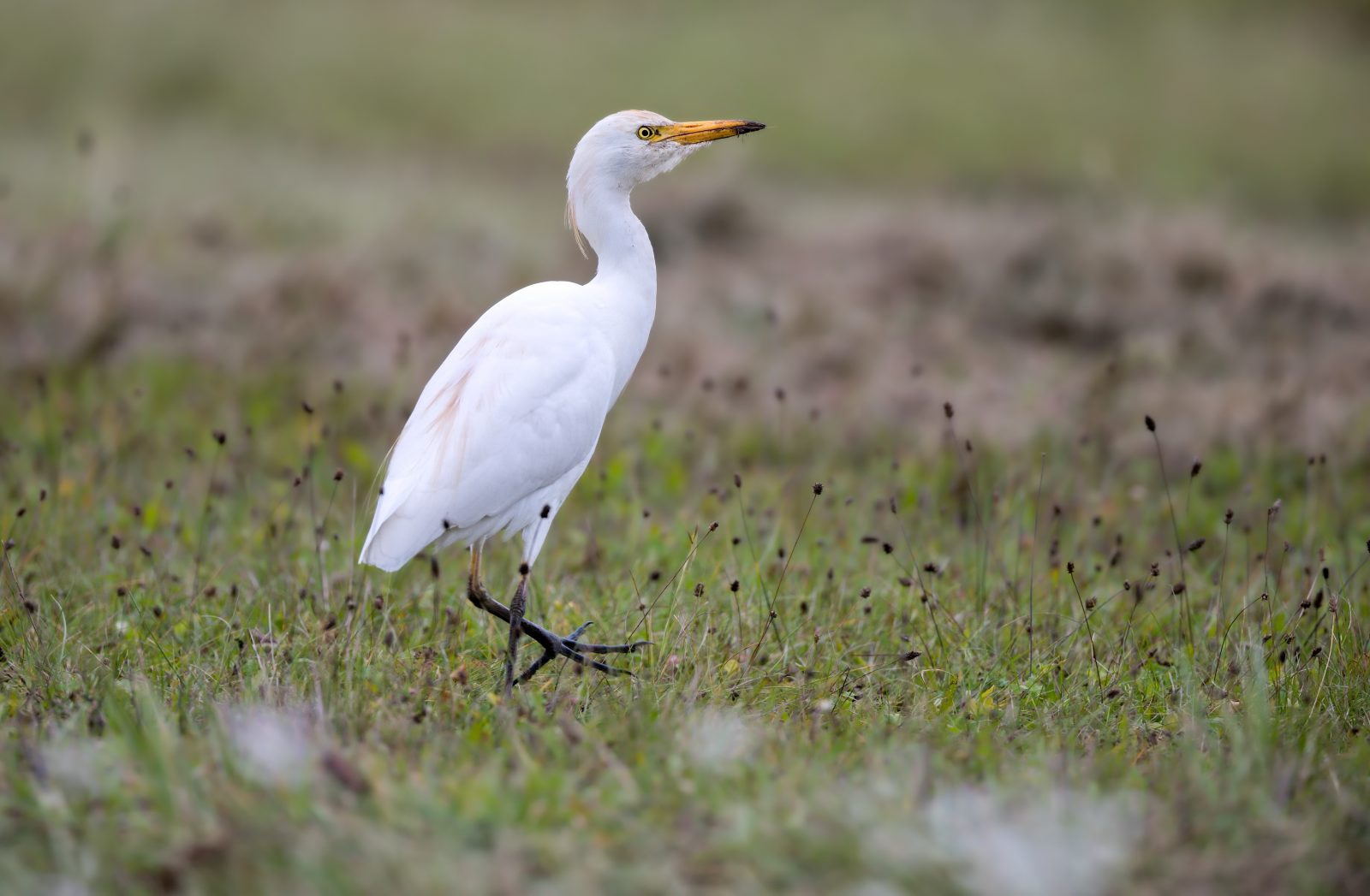
The abundance of the Cattle Egret increases in Europe. Since the species first appeared in the warmest parts of Europe, its trend has increased, and its home range has shifted northward, as shown by change maps comparing the distributions in the European Breeding Bird Atlases 1 and 2.
Photo by Pavel Štěpánek
What is new in the 2025 data update?
December 15, 2025
We are grateful to all national coordinators for their efforts to deliver their data by 2024. Although this message is not new, it is very accurate every year.
The abundance of the Cattle Egret increases in Europe. Since the species first appeared in the warmest parts of Europe, its trend has increased, and its home range has shifted northward, as shown by change maps comparing the distributions in the European Breeding Bird Atlases 1 and 2.
Photo by Pavel Štěpánek
• A PDF article facilitating the citation process of PECBMS data can be downloaded from the PECBMS website. It summarises the whole accompanying information on the recent PECBMS data update, which is now compiled and available on the PECBMS website. The article includes links to the indices and indicators, as well as to all monitoring programs that deliver data to the PECBMS. The recommended citation of the PECBMS data, if used in a project, is at the very beginning of the article.
• PECBMS produced indices and trends for 170 European wild bird species based on data from 30 countries.
• The number of species published in 2025 remained the same as in the previous years.
• All PECBMS contributing countries, except Germany, delivered their data up to and including 2024. Data from Germany up to 2023 were used for this update.
• Indices and indicators are published in the downloadable tables with standard errors and confidence limits. Confidence limits must be corrected if their values are negative; standard errors need no corrections.
• Country population sizes published in the European Red List of Birds (2021) by BirdLife International were used to weight national indices and calculate supranational indices and trends.
• The indices of some species have changed because of the combination of changes in several countries. Estonia, France and Hungary revised their data. The Czech Republic combined the old and new monitoring schemes for the first time. Finland and Spain revised their datasets and, for the first time, used a combination of a couple of monitoring schemes appearing in each country. All these changes have influenced the European index of some species.
• PECBMS revised the Crested Lark (Galerida cristata) data, noting that early European trends were skewed by steep declines in several countries during the 1980s and 1990s. To better reflect actual population changes, the time series was truncated to start from 1998.
• As usual, two species (Oenanthe cypriaca and Curruca melanothorax) haven’t been included in the PECBMS Wild Bird Indices (indicators) for Europe and the EU, as they are endemic species for Cyprus. Consequently, only 168 species are included in the indicators. The number of species included in the PECBMS Farmland and Forest Bird Indices for Europe and the EU remained unchanged (39 farmland species and 34 forest species).
• The majority of national coordinators use an updated version of a tool called RTRIM-shell to calculate national indices (developed in Statistics Netherlands). The tool uses the RTRIM package in R to produce outputs identical to those from previous indicator updates.
• The R-based tool for calculating European indices (RSWAN) is used regularly in PECBMS.
• We used the MSI tool to calculate supranational species indices (developed in Statistics Netherlands).
The computation procedure, data quality control, and the presented indices, trends, and indicators are generally consistent with the 2024 update. Changes in national data justify the inconsistencies.